 By Ken Millbank
Choosing new flooring is one of the most significant investments you can make in your home. It instantly alters the aesthetic, improves functionality, and can substantially boost property value. However, once you select the material, you face a major decision that will dictate the success of your project: should you install the flooring yourself as a do-it-yourself project, or should you hire a licensed professional?
While tackling a flooring project on your own can save money on labor costs, it also demands substantial time, specialized tools, and precise technical skill. Conversely, professional installation guarantees expertise and warranty protection, but it comes with a higher price tag. Evaluating the pros and cons of each approach helps you make an informed choice that aligns with your budget, timeline, and skill level.
Evaluating the DIY Flooring Installation Approach
Taking on a flooring installation project yourself holds undeniable appeal for handy homeowners. The primary motivation is financial, as labor costs often make up a large portion of a total contractor quote. Beyond saving money, completing a home improvement project on your own provides a strong sense of personal accomplishment and allows you to work entirely on your own schedule.
-
Lower Upfront Expenses: Without labor charges, your expenses are strictly limited to materials, underlayment, and the tools required for the job.
-
Flexible Scheduling: You can work evenings and weekends at your own pace without coordinating with an outside crew.
-
Learning New Skills: You gain valuable home maintenance experience and a deeper understanding of your home structure.
However, DIY flooring is not without significant drawbacks. Mistakes made during installation can ruin expensive materials, and correcting errors often costs more than hiring an expert in the first place. Furthermore, flooring installation is physically demanding work that requires hours of kneeling, measuring, cutting, and lifting.
Understanding Professional Flooring Installation
Hiring a professional contractor shifts the burden of labor, precision, and troubleshooting onto experienced technicians. Professional installers bring years of hands-on experience, specialized commercial-grade equipment, and a deep understanding of subfloor preparation that the average homeowner lacks.
-
Guaranteed Workmanship: Most reputable flooring companies offer an installation warranty, meaning any buckling, shifting, or lifting will be corrected at no additional cost.
-
Speed and Efficiency: Professionals possess the muscle memory and teamwork to complete a room or an entire house in a fraction of the time it would take an individual working solo.
-
Complex Subfloor Handling: Experts know how to identify and remediate uneven subfloors, moisture issues, and structural quirks that can ruin a new floor if ignored.
The downside to professional installation is straightforward: cost. Labor fees increase the overall budget of your project. Additionally, you must work around the contractor availability schedule, which can sometimes delay your home improvement timeline.
Material Suitability: Which Floors Can You DIY?
Not all flooring materials are created equal when it comes to installation difficulty. Your choice of material should heavily influence whether you attempt a DIY approach or call an expert.
Click-Lock Luxury Vinyl Plank and Laminate
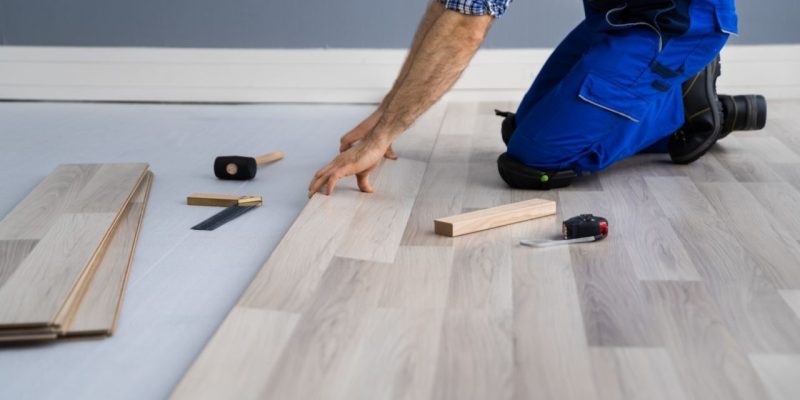
Luxury vinyl plank and laminate flooring are designed with user-friendly tongue-and-groove click systems. These materials “float” over the subfloor without requiring glue or nails, making them the most forgiving and accessible options for DIYers with basic carpentry skills.
Engineered and Solid Hardwood
Hardwood installation requires a high level of precision. Solid hardwood must be nailed or stapled to a wooden subfloor, while engineered hardwood may require gluing or floating depending on the specific product. Measuring cuts around door jambs and vents requires specialized saws and expert technique, making hardwood a safer bet for professionals.
Tile and Natural Stone
Ceramic, porcelain, and natural stone tile represent some of the most difficult flooring materials to install. The process demands precise layout planning, heavy wet saws for cutting, perfect mixing of mortar, accurate spacing, and meticulous grouting. One uneven tile throws off the entire grid, making professional installation highly recommended for tile work.
Carpet
Installing wall-to-wall carpet requires specialized tools such as a knee kicker, power stretcher, and seam roller. Improper stretching leads to wrinkles, ripples, and premature fraying, which is why carpet is rarely recommended as a standard DIY project.
Key Factors to Help You Decide
Before committing to a path, evaluate your project against a few critical criteria to ensure you do not bite off more than you can chew.
Time and Patience
Be honest about your schedule. If you work a full-time job and only have a few hours on Sunday, a DIY flooring project that should take three days might drag on for a month, leaving your home in a disruptive state of construction.
Tool Investment
Do you already own a miter saw, tapping blocks, spacers, pull bars, and measuring tools? If you have to purchase hundreds of dollars in specialized equipment for a single room, the financial savings of a DIY project quickly evaporate.
Subfloor Condition
If your subfloor is perfectly flat, clean, and dry, installation is straightforward. However, if your subfloor is uneven, sagging, or showing signs of water damage, it requires professional remediation before any new flooring can be laid down.
Frequently Asked Questions
Can I install new flooring directly over my existing old flooring?
In some cases, yes. Luxury vinyl plank or laminate can often be installed directly over existing tile or vinyl, provided the old surface is flat, clean, and securely adhered. However, carpeting and damaged wood floors must always be completely removed to ensure a stable subfloor.
What happens to my material warranty if I install the flooring myself?
Many flooring manufacturers require professional installation for their product warranties to remain valid. If you install the material yourself and manufacturing defects appear later, the company may deny your claim, citing improper installation techniques.
How do I know if my subfloor is level enough for new flooring?
You can test your subfloor by placing a six-foot straightedge or level across the floor in various directions. If you notice gaps greater than three-sixteenths of an inch underneath the straightedge, your subfloor requires leveling compounds or sanding before installation.
Is professional installation faster than a DIY approach?
Yes, professional installation is significantly faster. A seasoned crew can often complete an entire house in one or two days, whereas a homeowner working weekends might take several weeks to finish the same square footage.
What are the most common mistakes made during DIY flooring installation?
The most frequent mistakes include failing to leave expansion gaps around the room perimeter, ignoring subfloor moisture testing, measuring rooms incorrectly resulting in material shortages, and failing to acclimate flooring materials to the home climate before installation.
Do I need to let my new flooring acclimate before installing it?
Yes, wood, laminate, and luxury vinyl flooring must adjust to the temperature and humidity of your home. Leaving the unopened boxes in the room where they will be installed for twenty-four to forty-eight hours prevents the materials from expanding or contracting after installation.
What is your reaction?
Excited
0
Happy
0
In Love
0
Not Sure
0
Silly
0